Too Cold, Too Busy, Too Tired? Here’s How to Still Stay Active in January

January has a funny way of exposing all our excuses.

It’s dark.
It’s cold.
Your calendar is already full.
And somehow, after all the festive food and late nights, you feel more tired than rested.

The good news? Staying active in January doesn’t have to mean early alarms, packed gyms, or extreme plans. It just means moving smarter, not harder.

Here’s how to keep moving — even when it’s cold, busy, and you’re running on low energy.

1. When It’s Too Cold: Bring Movement Indoors

Let’s be honest — icy pavements and dark mornings kill motivation fast. Instead of fighting the weather, work around it.

Indoor movement ideas:

  • Walking while watching TV
  • Short strength sessions in the living room
  • Gentle cardio without stepping outside

This is where home fitness equipment shines.

👉 Amazon links here:

You don’t need a full home gym — just something that removes the weather barrier.


2. When You’re Too Busy: Shrink the Workout, Not the Habit

One of the biggest January mistakes? Thinking workouts must be long to “count.”

They don’t.

Ten minutes of movement is far better than zero, especially when life is hectic.

Try this:

  • 5 minutes of walking
  • 3 minutes of strength
  • 2 minutes of stretching

That’s it. Habit maintained.

👉 Amazon links SHOP NOW:

Keep equipment visible. If it’s easy to grab, you’re far more likely to use it.


3. When You’re Too Tired: Choose Energy-Giving Movement

Feeling tired doesn’t always mean you need rest — sometimes you need the right kind of movement.

Skip the high-intensity workouts and opt for:

  • Walking
  • Mobility flows
  • Light strength training
  • Stretching or yoga

These often increase energy rather than drain it.

👉 Amazon links to shop:

Think of movement as a way to feel better after, not exhausted during.


4. Stack Movement Into What You’re Already Doing

If motivation is low, don’t add more to your day — attach movement to existing habits.

Examples:

  • Walk during phone calls
  • Do squats while the kettle boils
  • Stretch while watching Netflix
  • Step on a treadmill during your favourite show

👉 Amazon links to shop below:

This removes the mental friction of “finding time.”


5. Lower the January Pressure

You don’t need:

  • A detox
  • A punishing workout plan
  • A “new you” mentality

What you need is consistency over intensity.

January movement is about:

  • Rebuilding routine
  • Waking your body back up
  • Feeling human again

Even 2–3 short sessions a week is a win.


6. Make It Comfortable, Not Perfect

The easier you make movement, the more likely it sticks.

Set yourself up for success:

  • Warm clothes
  • Comfortable trainers
  • Equipment that fits your space
  • Zero pressure on performance

👉 Amazon to shop links below:

Comfort beats motivation every time.


Final Thought: January Isn’t About Pushing — It’s About Starting

If it’s cold, busy, and you’re tired, you’re not failing — you’re human.

Movement doesn’t need to be dramatic to be effective.
It just needs to be repeatable.

Start small. Stay kind to yourself. And let January be the month you ease back in, not burn out.


Some links on this site are affiliate links. If you make a purchase through them, I may earn a small commission at no extra cost to you.

HOW MUCH SHOULD I WALK

Title: How Much Should You Walk to Lose 45 lbs? A Complete Guide by Age Group

Walking is one of the simplest, most accessible, and most effective forms of exercise to help you lose weight. If you’re aiming to shed 45 lbs, you’re not alone. Thousands of people are turning to walking as a reliable way to lose weight without the need for a gym membership or extreme diets. In this comprehensive guide, we break down how much you need to walk to lose 45 lbs, based on your age group, and provide tools and product recommendations to help you on your journey.

Losing 45 lbs can drastically improve your overall health by reducing your risk of chronic diseases like diabetes, heart disease, and joint issues. It can also increase your energy, improve mobility, and boost your self-esteem.

To lose 1 pound of fat, you need to burn approximately 3,500 calories. Therefore, losing 45 lbs equates to burning around 157,500 calories. On average, walking one mile burns about 100 calories, depending on weight, pace, and terrain.

Miles Needed to Lose 45 lbs by Age Group

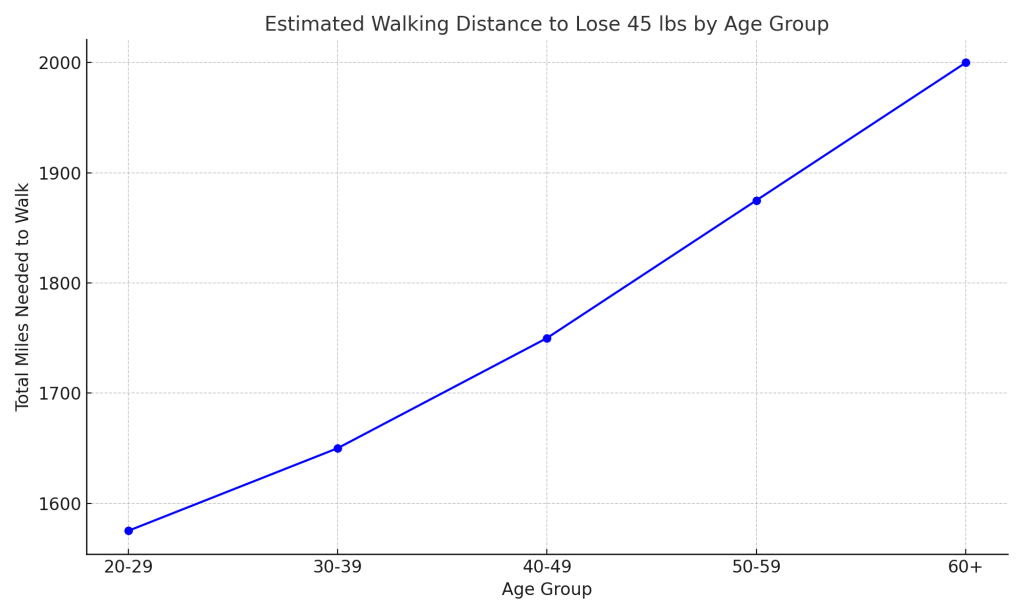
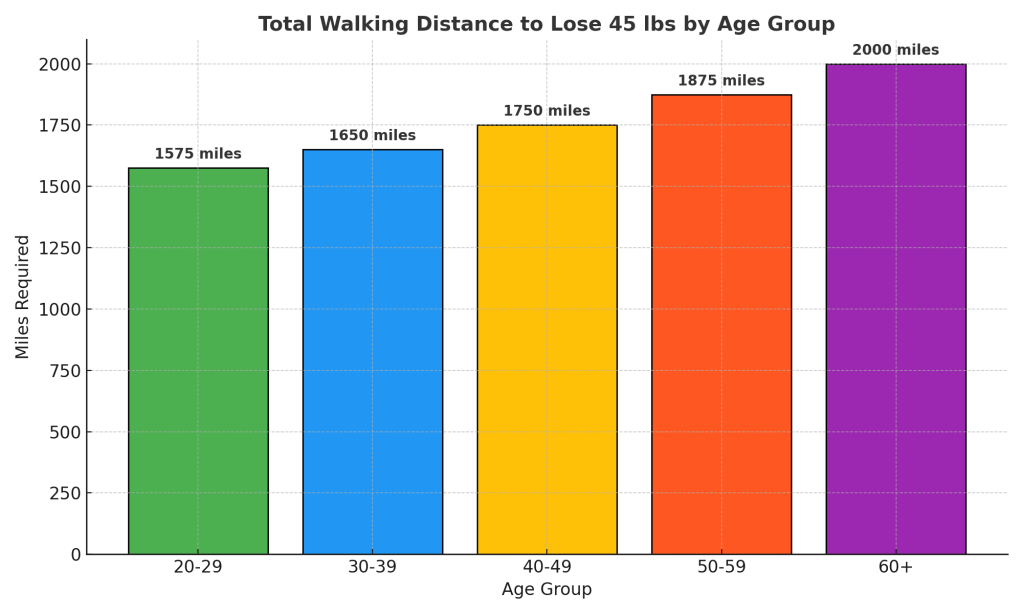
Metabolism and energy expenditure decline with age. As a result, older individuals often need to walk longer distances or walk more frequently to burn the same number of calories. Here’s a breakdown:

  • Age 20-29: ~1,575 miles
  • Age 30-39: ~1,650 miles
  • Age 40-49: ~1,750 miles
  • Age 50-59: ~1,875 miles
  • Age 60+: ~2,000 miles

These numbers assume consistent walking at a moderate pace (about 3.5 mph).

How Many Miles Should You Walk Per Day?

Let’s do the math for sustainable weight loss over time:

  • Goal: Lose 45 lbs in 6 months (approx. 180 days)
  • Age 30-39 example: 1,650 miles / 180 days = ~9.2 miles per day

This may sound like a lot, but don’t worry! You can adjust this based on your timeline and incorporate additional activities or dietary changes to supplement your efforts.

Make Your Walks More Effective

Boost calorie burn and improve results with these strategies:

  1. Walk briskly – Aim for 3.5 to 4 mph
  2. Add incline – Use hills or a treadmill incline
  3. Use weights – Try a weighted vest
  4. Track your steps – Use a fitness tracker

Recommended Gear to Supercharge Your Walking Routine

Investing in quality gear can make your walks more enjoyable and help you stay consistent.

  • Walking Shoes: A good pair of walking shoes is essential to avoid injuries and keep you comfortable.
  • Hydration Pack: Stay hydrated on long walks with a hydration backpack.
  • Smartwatch or Fitness Tracker: Track your distance and calories burned with a smartwatch.
  • Reflective Gear: Stay safe with reflective vests for early morning or late evening walks.

Tips for Sticking to Your Walking Plan

  1. Set a Routine: Schedule walks like any important appointment.
  2. Find a Walking Buddy: Accountability keeps you consistent.
  3. Use an App or : Try a TREADMILL to track progress and stay motivated.
  4. Mix It Up: Walk in new places, listen to audiobooks or podcasts.
  5. Set Milestones: Break down your 45 lb goal into 5 lb increments and reward yourself (non-food rewards!) for each milestone.

Health Considerations

Before starting any weight loss program, especially if you are over 50 or have underlying conditions, consult with a healthcare provider. Start slow and gradually build up your distance and intensity.

Sample Weekly Walking Plan

DayActivityDurationNotes
MondayBrisk Walk60 minUse weights or incline
TuesdayInterval Walking45 minAlternate fast and slow paces
WednesdayLong Walk90 minModerate pace
ThursdayRest or Light StretchingRecovery
FridayBrisk Walk60 minTry a new route
SaturdayHill or Incline Walk45 minBurn extra calories
SundayLong Walk90 minReflect on your progress

Many people have successfully lost weight through walking. One example: John, 42, started walking 6 miles a day while using a fitness tracker and dropped 50 lbs in under a year. His secret? Consistency, a good pair of walking shoes, and small daily goals.

Losing 45 lbs is a significant goal, but breaking it into manageable steps makes it achievable. Walking is low-impact, free, and flexible enough to fit into almost any schedule. No matter your age, you can tailor your walking plan to work with your lifestyle and fitness level.

Ready to get started? Equip yourself with the right tools and gear and take that first step today!

Recommended Tools Recap (Add Your Amazon Affiliate Tag):

Affiliate Disclosure:
Hey! Just so you know, some of the links on this blog are affiliate links. That means if you click through and buy something, I may earn a small commission — at no additional cost to you. Thanks for supporting the site! As an Amazon Associate, I earn from qualifying purchases.